LATEST IRAQ NEWS

MIDEAST CONFLICT

Wednesday, July 19, 2006

Evacuations Underway in Beirut

The Washington Post

Israel Continues Deadly Airstrikes; Hezbollah Fires Scores of Rockets

By Anthony Shadid
Washington Post Foreign Service
Wednesday, July 19, 2006; A01


BEIRUT, July 18 -- By helicopter and ship, hundreds of Americans and Europeans fled on Tuesday from Beirut, ending its first week of siege, as casualties mounted in deadly Israeli raids that struck a Lebanese military base, a truck carrying food from Syria and a village near the border. The militant group Hezbollah fired at least 100 rockets into Israel, killing one civilian.

On a sweltering day, Norwegian, Swedish, Greek and British ships pulled into Beirut's harbor, most of them trying to load their passengers before nightfall. From a helipad at the U.S. Embassy overlooking Beirut, the dull thud of rotors announced the arrival of helicopters, which ferried passengers to the island of Cyprus, taking 30 people on each trip. Other U.S. citizens waited, growing more frustrated over having to endure another day of a conflict that has begun to impose a wartime logic in the city.

"I had to come and cry at the door of the U.S. Embassy, kissing hand and foot, telling them they must let me leave," said Raba Letteri, a child-care provider from Reston, Va., who was on vacation in Lebanon with her husband and two children.

They were living near Beirut's international airport, a swath of the capital barraged in Israeli airstrikes. Her 2-year-old son, Aaron, had a stomach infection. As they waited to board, he burst into tears. "This is the worst thing in my life," she said.

Through the day, Beirut itself was relatively quiet. Life returned to some streets so far unscathed by the attacks. Even traffic in the battered Shiite Muslim suburbs, Hezbollah's stronghold, trickled past the rubble of destroyed bridges and the shattered glass from apartment buildings that littered the streets. To some, the day was a brief respite as evacuations got underway. What might follow the foreigners' departure was a question many asked.

"I feel in my heart that after the foreigners leave, big problems are on the way," said Jamil Abu Hassan, a burly 56-year-old, loitering near the port. "Today, the embassies are taking their people. Tomorrow, the next day? God knows what will happen."

Hezbollah fired at least 100 rockets at Israel on Tuesday, including a large barrage an hour before sunset, striking about 10 towns and cities across northern Israel, from Haifa on the Mediterranean coast to tourist communities in the southern Galilee region. [Two big explosions reverberated over Beirut early Wednesday, and missiles hit towns to the east and south of the capital, the Associated Press reported.]

One Israeli was killed Tuesday in a rocket strike in Nahariya about four miles south of Lebanon on the coast, the Israeli military reported. Twenty-one people were injured. So far, in the fighting, 25 Israelis have been killed, including 12 soldiers.

[Israeli forces entered the central Gaza Strip early Wednesday and clashed with Palestinian militants, the Reuters news agency reported. Witnesses reported heavy gunfire near the Maghazi Refugee Camp, not far from the Gaza Strip's border with Israel. There were no immediate reports of casualties.]

Several rockets struck Haifa, Israel's third-largest city, about 22 miles south of Lebanon, where eight civilians were killed in a rocket barrage Sunday, the Israeli military said. The city's port remained closed for a second day because of the danger.

More than 720 Hezbollah rockets -- a small portion of the militant Islamic group's arsenal -- have struck Israel since hostilities began a week ago, when Hezbollah crossed the border and seized two Israeli soldiers. In the wake of the attack, Israel has unleashed a destructive military offensive that has killed more than 230 Lebanese, most of them civilians. The country's airport is closed, and the south is largely cut off from the rest of the country by wrecked roads and collapsed bridges.

The Israeli military said its jets flew about 110 raids over Lebanon on Tuesday, part of a campaign that has created competing narratives of the war. An Israeli military spokeswoman said the raids were targeting trucks carrying Hezbollah weapons, Katyusha rocket launchers in southern Lebanon, Hezbollah weapons storage facilities, bridges and roads used to transport weapons and fighters -- "all of this to damage the Hezbollah infrastructure," she said. In Lebanon, anger grew at the number of civilians killed and the dismantling of infrastructure that many Lebanese saw as their greatest achievement in the post-civil war era.

"This is a city of ghosts," said Adib Hourani, a 26-year-old gas station attendant, pointing down a deserted street.

In Aitaroun, a village near the Israeli border, a family of five was killed, although some witness accounts put the toll at nine. On the twisting mountain road to Damascus, an Israeli raid struck a truck carrying sacks of sugar and rice bound for Beirut, as well as two other large trucks, a pair of sedans and a four-wheel-drive taxi. In Kfar Chima, a Lebanese army base took a direct hit as troops rushed to bomb shelters, killing at least 11 Lebanese soldiers and wounding 35, the military said. Black fires stained nearby cinder-block tenements, and charred, twisted fenders, engine blocks and debris were scattered along the highway overlooking the base.

Israeli Prime Minister Ehud Olmert has said that Israel wants the Lebanese army to deploy to the border, now under the effective control of Hezbollah, but on several occasions, Israeli aircraft have targeted Lebanese military installations.

An Israeli military spokeswoman, Capt. Noa Meir, said the military was checking reports of the strike on the base, reiterating that Israeli forces were "doing everything we can to keep civilians and the Lebanese military out of harm's way."

Even the most optimistic Lebanese officials have acknowledged that diplomacy to end the conflict remains at its initial stages. British Prime Minister Tony Blair and U.N. Secretary General Kofi Annan have suggested that a U.N. force deploy to the Lebanese border. Annan said the force would have to be more effective than the current U.N. Interim Force in Lebanon, which was largely ineffective in stopping either Hezbollah or Israel.

Although some European countries have expressed support, both the United States and Israel have responded coolly, and Israeli officials, after meeting U.N. negotiators Tuesday, said that the campaign will not let up before the soldiers are released and Hezbollah withdraws from the Israeli border. For their part, Hezbollah officials seem to have become convinced that the stakes of the war have become much higher: a U.S.-backed Israeli plan to strategically realign the region.

To a striking degree, both the Israeli public and Hezbollah's supporters seem prepared for a longer struggle.

A poll in Tuesday's Yedioth Aharonoth, an Israeli daily, found that 86 percent of those surveyed said that the Israeli offensive against Hezbollah was "the right thing to do," and 81 percent wanted it to continue; 58 percent said it should continue until Hezbollah is destroyed, and 17 percent said they favored a cease-fire and the start of negotiations.

In Beirut's southern suburbs, where trash has piled up on corners and shops were almost uniformly shuttered, Abbas Fattuni sat with a friend smoking a water pipe in front of his auto parts store. They watched the traffic, enjoying the respite of bombing in the capital.

"We're nothing without the resistance," he said, as his friend nodded his agreement between puffs. "When a Lebanese dies, anywhere in the country, no one in the Arab world lifts a finger. Only the resistance takes care of them."

Across Lebanon, the siege began reverberating in people's lives. The price for items like kerosene for cooking and flour have all increased. Residents are withdrawing money from banks and trying to convert their Lebanese pounds into U.S. dollars, fearing a devaluation. The price of gasoline in the southern city of Tyre has increased more than sixfold.

"Six days, no sleep. We couldn't even buy bread," said Mirna Ballout, a 30-year-old Lebanese American who left Tyre on Monday and was standing outside the U.S. Embassy on Tuesday. "It's not fair -- whether it's for Hezbollah or whether it's for Israel. It's just not fair for the people living here."

Her two sons, Bassam, 7, and Yassine, 4, leaned against a suitcase. A few hours earlier, she comforted them after they thought a car door slamming was a bomb. Her daughter, 9-year-old Dana, held the handle of her pink Hello Kitty suitcase and recounted the days, her eyes wide with fear and surprise. "It's my first time," she said. "That was why I was really scared."

She smiled. "I hope this is my last time."

The helicopters ferried what the embassy called special cases on Tuesday -- the sick, elderly and families with young children. Officials said 136 American students studying at the American University of Beirut and the Lebanese American University were evacuated aboard a Norwegian vessel from Beirut's port.

U.S. officials said they believe they will have the capability to transport as many as 2,400 U.S. citizens out of Lebanon on Wednesday, using two civilian cruise ships and Marine Corps helicopters to ferry people to nearby Cyprus. The boosted evacuation effort could include the removal of more than 5,000 citizens by the end of the week.

State and Defense department officials said they have been limited to air and sea evacuations because they have deemed the roads leading out of the country into Syria to be too hazardous. The Orient Queen cruise ship, with the ability to carry 800 to 1,000 people, docked in Beirut on Tuesday night and was preparing to leave for Cyprus at dawn Wednesday. A second ship, slated to carry about 1,400 people, was also scheduled to be available Wednesday.

Vice Adm. Patrick Walsh, commander of the U.S. 5th Fleet, said sailors and Marines from the Iwo Jima Expeditionary Strike Group and the 24th Marine Expeditionary Unit had been ordered to the Mediterranean Sea to assist in the large-scale evacuation. Nine U.S. warships were headed to the region to provide security and, if needed, to help transport civilians to safety.

One of those departing was Adam al-Sarraf, a 20-year-old American from Los Angeles, who was studying Arabic at the American University of Beirut. His Iraqi-born father, working in Baghdad, had called to give him advice: Get off the fifth floor and stay in the basement. Watch out for the windows. The two planned to meet in Amman after the son was evacuated.

"The students really sympathize with the people here," Sarraf said, standing on the campus before his departure to the port, where he was to board a Norwegian ship. "We understand they're going through much more than we are."

Correspondent John Ward Anderson in Jerusalem, staff writer Josh White in Washington, and staff photographer Michael Robinson-Chavez and special correspondent Alia Ibrahim in Beirut contributed to this report.


© 2006 The Washington Post Company

U.S. Appears to Be Waiting to Act on Israeli Airstrikes

The New York Times

July 19, 2006
U.S. Appears to Be Waiting to Act on Israeli Airstrikes
By HELENE COOPER and STEVEN ERLANGER

WASHINGTON, July 18 — The outlines of an American-Israeli consensus began to emerge on Tuesday in which Israel would continue to bombard Lebanon for about another week to degrade the capabilities of the Hezbollah militia, officials of the two countries said.

Then, Secretary of State Condoleezza Rice would go to the region and seek to establish a buffer zone in southern Lebanon and perhaps an international force to monitor Lebanon’s borders to prevent Hezbollah from obtaining more rockets with which to bombard Israel.

American officials signaled that Ms. Rice was waiting at least a few more days before wading into the conflict, in part to give Israel more time to weaken Hezbollah forces.

The strategy carries risk, partly because it remains unclear just how long the rest of the world, particularly America’s Arab allies, will continue to stay silent as the toll on Lebanese civilians rises.

On Tuesday, the seventh day of the face-off, Israeli warplanes battered more targets in Lebanon, killing 30 people, including 11 members of the Lebanese Army, when bombs hit their barracks east of Beirut. Four of the dead were officers, and 30 more soldiers were wounded.

In southern Lebanon, nine members of a single family were killed and four wounded in an Israeli airstrike on their house in the village of Aitaroun, near the Israeli border.

Some 500,000 Lebanese have fled their homes to escape the violence, the United Nations estimated.

Hezbollah rockets again hit Israel’s port city of Haifa and Nahariya, a coastal town just south of the border, where one man died and several were wounded, one critically. Hundreds of thousands of Israelis continued to spend their time in shelters, and Haifa was largely shut down, with only grocery stores and pharmacies open. More than 130 rockets were fired, Israeli officials said.

American officials said Washington was discussing with its Arab allies and Israel how to beef up Lebanon’s borders, a central Israeli demand. Israel has been lukewarm to the idea of an international force in Lebanon, but is willing to consider such a deployment if it includes troops from major powers and is used to prevent Hezbollah from supplementing its arsenal.

On Tuesday, Israel said it blew up six more long-range rockets that it said were being transported by road into Lebanon from Syria.

American and Israeli officials are also contemplating a 12-mile buffer zone in southern Lebanon to keep Hezbollah away from the Israeli border. While disarming Hezbollah entirely remains Israel’s goal, it is no longer demanding that as a condition of a cease-fire, officials said.

Israeli airplanes have been pounding Hezbollah targets, in particular the two dozen or so long-range rockets in the militant group’s arsenal believed to be capable of hitting Tel Aviv.

Israel had made clear that it does not want Ms. Rice to begin a peacemaking effort yet, and the Bush administration has, for the time being, gone along with an Israeli request for more latitude. President Bush and American officials have resisted joining other world leaders in calling for an immediate cease-fire, reflecting the Israeli view that reaching a truce before destroying a significant number of Hezbollah’s missiles would open Israel up to the possibility of more attacks.

President Bush, as he has repeatedly, said Tuesday that Israel must be allowed to defend itself. “Everybody abhors the loss of innocent life,” he said, speaking at the White House before a meeting with Congressional members. “On the other hand, what we recognize is that the root cause of the problem is Hezbollah.”

“Some people are uncomfortable with the American position, and we’re very careful how we talk about it,” a senior American official said yesterday. “We are not going to be wagering with the lives of innocent people here,” he said, adding that privately, Bush administration officials are telling the Israelis that there is a limit to how much more time the United States will be able to give Israel. He spoke on condition of anonymity under normal diplomatic rules.

Beyond the desire to give Israel time to weaken Hezbollah militarily, administration officials said Ms. Rice should not go to the region until she can actually produce results. Israel, which is trying to destroy the military capacity of Hezbollah and secure the release of two captured soldiers, said it is targeting only Hezbollah and not the Lebanese Army, although attacks on Monday and Tuesday killed 19 Lebanese soldiers.

Again on Tuesday, cities and towns in southern Lebanon and the densely packed slums at the southern edge of Beirut that are Hezbollah’s stronghold bore the brunt of the barrage. While the Israelis say they have carefully targeted 1,000 sites thus far, the attacks seem to have spread almost randomly across the country.

A cement truck near Jbeil, also known as the ancient city of Byblos, up the coastline in Christian territory, was hit on Tuesday. The Israeli military said the vehicle was suspected of carrying weapons.

The Lebanese prime minister, Fouad Siniora, criticized the world for not stopping the Israeli offensive. “The international community is not doing all that is can in order to stop Israel continuing its aggression against Lebanon,” Mr. Siniora said in an interview in his Beirut office. “They are stopping short of exercising the necessary pressure on Israel while Israel is taking this as a green light.”

In other comments, he accused Israel of “committing massacres against Lebanese civilians and working to destroy everything that allows Lebanon to stay alive.”

As the bombs and rockets fell, diplomats and officials continued to debate the effectiveness of any new international force that could patrol the border and help Lebanon implement United Nations Security Council resolutions that call for Hezbollah to be disarmed and for the Lebanese government to extend its authority over the whole country.

A team sent by United Nations Secretary General Kofi Annan met in Jerusalem on Tuesday with senior Israeli officials, including the foreign minister, Tzipi Livni, and top aides to Prime Minister Ehud Olmert. Mr. Olmert dropped in at the end of their meeting to explain the Israeli position, Israeli officials said, underlining his skepticism about how any new force might work.

Mr. Olmert, in a televised speech to Parliament on Monday night, said that Israel would continue fighting until its soldiers were free, the Lebanese Army was deployed along the border and Hezbollah was effectively disarmed in line with Security Council Resolution 1559. Hezbollah has consistently rejected those terms.

In the last seven days, the Israelis have carried out about 2,000 sorties by warplanes and attack helicopters and hit 650 targets, the Israeli Army said.

After meeting the United Nations envoys, Ms. Livni said Israel would insist that any settlement include provisions to ensure that Iran and Syria cannot rearm Hezbollah, perhaps through some form of international monitoring at the Syrian border and the Beirut airport. Israel has bombed the airport and routes from Syria, and has put a sea blockade on Lebanese ports.

Ms. Livni said that any settlement must “end the Iranian and Syrian control over Lebanese and Israeli lives” and repeated Israel’s demand that its three captured soldiers — two by Hezbollah and one by Hamas and other militants in Gaza — be released “immediately and without conditions.”

Mr. Annan said in Brussels that any force must have a different set of instructions from the current, toothless United Nations force, known as Unifil, still in southern Lebanon. “It is urgent that the international community acts to make a difference on the ground,” Mr. Annan said.

Giora Eiland, until recently Israel’s national security adviser, said an international force is not in Israel’s interest if it acts just as a buffer. It can only be effective, he said, “if the other side does not want any provocation and wants to maintain quiet” and “if there’s a credible address on the other side” with control over Lebanon.

Israel should, he said, insist that any international force “make it possible for Lebanon to do what it has to do and not be a buffer between us and them, which would reduce the Lebanese government’s responsibility.”

Gholam Ali Hadad-Adel, the president of the Iranian Parliament, told a rally in Tehran on Tuesday that Israelis should “flee occupied Palestine.” He called Israel “this filthy tumor” that “lies in the body of the Islamic world,” and he warned the United States that as long as Israel exists, “Muslims will not stop hating America.”

In other attacks in Lebanon on Tuesday, a convoy of medical goods donated by the United Arab Emirates was hit in the Bekaa region near Zahle, a mostly Christian town on one of the few open roads linking Syria and Beirut. Two trucks were destroyed and their drivers killed.

The evacuation of foreigners continued for a second day as a ferry chartered by the French government carrying over 1,200 people reached Cyprus. The American Embassy began airlifting its citizens by helicopter, with some 320 Americans scheduled to leave by the end of the day, and another 1,000 on Wednesday. About 8,000 Americans are registered with the embassy but there are an estimated 25,000 Americans or dual nationals living in Lebanon. Britain sent six ships to the region.

In the interview, Mr. Siniora, the Lebanese prime minister, said that he favored a release of the two Israeli soldiers. But he coupled that call with other requirements.

Any solution to the crisis, he said, should include Israel’s withdrawal from the disputed Shebaa Farms area of the border, the release of Lebanese detainees in Israeli jails and a return to the terms of the 1949 armistice between the two countries.

He suggested the Lebanese Army would move to southern Lebanon once these conditions were met. He backed the idea of a more robust international force, but only after “all the issues” were put on the table, and he stopped short of condemning Hezbollah for inviting the Israeli attacks on the rest of the country.

Meanwhile, Beirut settled into its first week of violence and conflict. Many shops, banks and stores opened for a few hours in the morning, but closed much earlier than usual. The city streets were calm, with little traffic.

In the newly rebuilt city center, where thousands of tourists and Lebanese usually gather at the end of the day to smoke a water pipe, meet for a drink before dinner, or take the children for a walk, there were only private security guards and soldiers. Beirut’s luxury stores, famous throughout the region, were shut.

Helene Cooper reported from Washington for this article, and Steven Erlanger from Jerusalem. Greg Myre contributed reporting from Haifa, Israel, and Jad Mouawad from Beirut, Lebanon.


Copyright 2006 The New York Times Company

Israeli ground troops enter Lebanon

Yahoo News
July 19, 2006

Israeli ground troops enter Lebanon
By RAVI NESSMAN, Associated Press Writer


Israel declared Tuesday it was ready to fight Hezbollah guerrillas for several more weeks, raising doubts about international efforts to broker an immediate cease-fire in the fighting that has killed more than 260 people and displaced 500,000. The military said early Wednesday it sent some troops into southern Lebanon searching for tunnels and weapons.

Despite the diplomatic activity, Israel is in no hurry to end its offensive, which it sees as a unique opportunity to crush Hezbollah. The Islamic militants appear to have steadily built up their military strength after Israel pulled its troops out of southern Lebanon in 2000.

Israeli warplanes struck an army base outside Beirut and other areas in south Lebanon on Tuesday, killing 27 people, and Hezbollah rockets battered Israeli towns, killing one Israeli. Five big explosions reverberated over Beirut early Wednesday, and missiles hit towns to the east and south of the capital.

At daybreak Wednesday, a small number of Israeli troops were operating just across the border inside southern Lebanon, looking for tunnels and weapons, the Israeli military said without providing any more details.

The incursion came a day after Israel indicated that it might send large numbers of ground troops into the southern Lebanon, but Israel's U.N. Ambassador Dan Gillerman denied Wednesday's operation was part of any such operation.

"What is going on at the moment is a number of Israeli ground troops very near to the border on the Lebanese side, trying to destroy some Hezbollah outposts," he told CNN.

"This is an operation which is very measured, very local," he said. "This is no way an invasion of Lebanon. This is no way the beginning of any kind of occupation of Lebanon."

Israel's forecast of a lengthy campaign, coupled with President Bush's evident reluctance to bring pressure on Israel to agree to a cease-fire, seemed to quash any hopes for an early resolution of the crisis, now entering its second week.

Hundreds of Americans and Europeans fled Lebanon aboard ships, and hundreds of other foreigners prepared to evacuate in coming days. Many Americans complained over what they saw as a slow U.S. response. And after criticism from Congress, the State Department dropped plans to ask Americans to pay for their evacuations on commercial vessels.

Families in southern Lebanon, the site of most Israeli airstrikes, drove north on side roads, winding among orange and banana groves and waving improvised white flags from their car windows.

In an interview with the BBC, Lebanese Prime Minister Fuad Saniora said Israel is "opening the gates of hell and madness" on his country. He urged Hezbollah, which is backed by Syria and Iran, to release two captured Israeli soldiers but said Israel's response had been disproportionate.

Bush said he suspects Syria is trying to reassert influence in Lebanon more than a year after Damascus ended what had effectively been a long-term military occupation of its smaller, weaker neighbor.

"We have made it very clear that Israel should be allowed to defend herself," Bush said in Washington. "We've asked that as she does so that she be mindful of the Saniora government. It's very important that this government in Lebanon succeed and survive."

Israeli Prime Minister Ehud Olmert blamed Iran for sparking the clashes between Israel and Hezbollah, saying the country was trying to distract the world from the controversy over its nuclear program.

The offensive was sparked by the soldiers' capture July 12 but has now broadened into a campaign to neutralize Hezbollah.

"I think that we should assume that it will take a few more weeks," Maj. Gen. Udi Adam, head of the army's northern command, told Army Radio.

The army's deputy chief of staff, Maj. Gen. Moshe Kaplinski, said Israel has not ruled out deploying "massive ground forces into Lebanon."

Israel, which has mainly limited itself to attacks from the air and sea, had been reluctant to send in ground troops because Hezbollah is far more familiar with the terrain and because of memories of Israel's ill-fated 18-year-occupation of south Lebanon that ended in 2000.

But Kaplinski said Israel had no intention of getting bogged down for a second time.

"We certainly won't reach months, and I hope it also won't be many more weeks. But we still need time to complete the operation's very clear objectives," he told Israel Radio.

Israeli Cabinet minister Avi Dichter said the country may consider a prisoner swap with Lebanon to win the soldiers' release, but only after the military operation.

White House spokesman Tony Snow declined to react to Kaplinski's comments, but said the administration opposed a return to the situation before the outbreak of violence.

"A cease-fire that would leave intact a terrorist infrastructure is unacceptable," Snow said. "So what we're trying to do is work as best we can toward a cease-fire that is going to create not only the conditions, but the institutions for peace and democracy in the region."

Diplomatic efforts to end the fighting, which has killed at least 237 people in Lebanon and 25 in Israel, continued Tuesday, as a U.N. mediation team met with Israeli leaders a day after speaking with Lebanese officials in Beirut.

Israeli Foreign Minister Tzipi Livni said a cease-fire is impossible unless the soldiers captured by Hezbollah in a cross-border raid are released and Lebanese troops are deployed along the border with a guarantee that Hezbollah would be disarmed. Her comments indicated Israel would not demand that Hezbollah be disarmed before any cease-fire deal can take effect.

A proposal to send a new international force to bolster the 2,000-member U.N. force in south Lebanon gained momentum.

Western nations have proposed the stronger force as part of a possible cease-fire agreement, and U.N. Secretary-General Kofi Annan said Tuesday that a new force must be "considerably" larger and better armed than the current force, which is viewed as weak and ineffectual. Secretary of State Condoleezza Rice also called for the introduction of a strong peacekeeping operation.

Livni said Israel's experience with the current U.N. force was "not satisfactory," and it prefers no such force in the long-term, but left open the possibility of a temporary international force.

In a statement, Olmert said he would be cautious about a new force. "It seems to be it's too early to debate it," he said.

The Israeli air force kept up its strikes early Wednesday with two major blasts that appeared to be from hits in Beirut's southern suburbs. Missiles also hit Chuweifat — a coastal town where several factories are located, just south of the capital — and Hadath, a mainly Christian town just east of Beirut, local television said. There were no immediate word of casualties.

On Tuesday, Israeli jets struck across southern Lebanon, hitting a military base at Kfar Chima as soldiers rushed to their bomb shelters, the Lebanese military said. At least 11 soldiers were killed in an engineering unit and 35 were wounded, it said. The base is adjacent to Hezbollah strongholds often targeted by recent Israeli strikes.

Lebanese Defense Minister Elias Murr denounced the strike as a "massacre," saying the regiment's main job was to help rebuild infrastructure. The Lebanese army has largely stayed out of the fighting, confining itself to firing anti-aircraft guns at Israeli planes. But Israeli jets have struck Lebanese army positions.

Israel did not give a reason for the strike on the base.

Nine members of the same family were killed when a bomb hit their house in the village of Aitaroun, near the border, Lebanon's state-run news agency said, citing the police. Israeli warplanes also struck southern Beirut, and hit four trucks that Israeli officials said were bringing in weapons.

"That is intolerable terrorist activity," said Capt. Jacob Dallal, an Israeli army spokesman.

Hezbollah guerrillas fired a barrage of rockets into northern Israel on Tuesday afternoon, killing a man in the town of Nahariya and setting fire to the top of a two-story apartment building.

At least 100 rockets fell into Israel, hitting a string of towns, including the city of Haifa.

More than 750 rockets have hit Israel since the violence began, forcing hundreds of thousands of Israelis to take cover in underground shelters.

Some 500,000 people have been displaced in Lebanon by the violence, according to the U.N.'s most recent estimate.

With the fighting unabated, foreign citizens fled Lebanon on Tuesday.

Military helicopters ferried 120 Americans from the U.S. Embassy in Beirut, and 200 more left on a ship chartered by Sweden to rush out nearly 1,000 Europeans. About 180 British also left on a warship.

But a plan to evacuate more of the 25,000 Americans in the country on a cruise liner, the Orient Queen, was delayed a day.

Lebanese-American Jonathan Chakhtoura said he was extremely disappointed with the Americans' response.

"Every time I call to see what's going on the lines are busy. When they answer, they say they don't know," the 19-year-old fashion design student said. "A lot of people don't know what is going on. There is so much confusion. If it's security they are worried about, then I think we will be more secure if we know what is going on."

___

AP correspondents Sam F. Ghattas and Zeina Karam in Beirut, Lebanon, contributed to this report.

Monday, July 17, 2006

Diplomats Seek Foreign Patrols for Mideast

Bush's Bull Session: Loud And Clear, Chief

Just another reason to love the guy!

Cheney argues against Iraq timetable

The Democrats just don't get it.

Gunmen kill 50 in Iraqi market attack

Toll Climbs In Mideast As Fighting Rages On

Iraq Reconstruction Report 7-14-06

Central Command releases a weekly Iraq Reconstruction Report. I am going to start linking to it here. Click the link above or click here.

Saturday, July 15, 2006

More Iraq Progress

CENTCOM PRESS RELEASE:

July 13, 2006

BAGHDAD – Iraq witnessed a historic event today with the transfer of security responsibility in Muthanna Province from the Multi-National Force - Iraq (MNF-I) to the Provincial Governor and civilian-controlled Iraqi Security Forces. The handover represents a milestone in the successful development of Iraq’s capability to govern and protect itself as a sovereign and democratic nation. Muthanna is the first of Iraq’s 18 provinces to be designated for such a transition.

Thursday, July 06, 2006

N. Korea missile aimed at area off Hawaii - report

TOKYO (Reuters) - A North Korean missile launched on Wednesday was aimed at an area of the ocean close to Hawaii, a Japanese newspaper reported on Friday.
Experts estimated the Taepodong-2 ballistic missile to have a range of up to 6,000 km, putting Alaska within its reach. Wednesday's launch apparently failed shortly after take-off and the missile landed in the sea between the Korean peninsula and Japan, a few hundred kilometres from the launch pad.

But data from U.S. and Japanese Aegis radar-equipped destroyers and surveillance aircraft on the missile's angle of take-off and altitude indicated that it was heading for waters near Hawaii, the Sankei Shimbun reported, citing multiple sources in the United States and Japan.

North Korea may have targeted Hawaii to show the United States that it was capable of landing a missile there, or because it is home to the headquarters of the U.S. Pacific fleet, the paper said.

An alternative explanation might be that a missile could accidentally hit land if fired towards Alaska, the report said.

A separate report in the Mainichi Shimbun daily cited U.S. and Japanese government officials as saying a piece of the Taepodong-2 missile fell off immediately after take-off, strengthening the view that the launch was a failure.

Friday, June 30, 2006

Military claims gains on Iraqi terrorists

By KIM GAMEL, Associated Press Writer

BAGHDAD, Iraq - The U.S. military claimed an advantage in the fight against al-Qaida in Iraq on Thursday, saying raids since the death of its leader have forced many of its foreign fighters out into the open to be captured or killed.

Iraq's bloodshed continued. At least 46 deaths from violence were reported across the country, including nine bullet-riddled bodies pulled from rivers — apparent victims of sectarian death squads.

Maj. Gen. William Caldwell, spokesman for U.S. forces in Iraqi, acknowledged Iraqi civilians were suffering most from the insurgency, accounting for 70 percent of all deaths and injuries, while he said the number of U.S. casualties did not appear to be on the rise.

But he said the Americans gained momentum in its fight against al-Qaida in Iraq after killing Abu Musab al-Zarqawi, and have devoted a lot of resources to targeting his successor as leader, Abu Ayyub al-Masri.

"There is no question, if we can take him down, that will just disrupt the organization ... to the point where it would be ineffective for a long period of time," Caldwell said. "It is very disorganized right now. And it is very disrupted right now."

He said coalition and Iraqi security forces had captured or killed 57 foreign fighters this month.

"The reason we were able to pick up and track some of these mid-level people ... in the last few weeks is because they've been forced to conduct meetings, to get out and be more visible, because their system has been so disrupted," he said. "And that has given us the opportunities to find them, track them and go get them."

On Wednesday, Iraqi authorities said they had captured an al-Qaida suspect from Tunisia who allegedly bombed a Shiite shrine earlier this year, setting off a spasm of violence between Sunnis and Shiites.

Caldwell said Yousri Fakher Mohammed Ali, also known as Abu Qudama, was captured May 20 after he was seriously wounded in a clash with security forces north of Baghdad. Haitham Sabah Shaker Mohammed al-Badri, the alleged Iraqi mastermind of the Feb. 22 attack on the shrine in Samarra, remains at large.

While cracking down on terror groups, the Iraqi government has offered an olive branch to the Sunni-dominated insurgency, with Prime Minister Nouri al-Maliki announcing a national reconciliation plan and reaching out to militants with an amnesty proposal.

The amnesty would not absolve those who have killed Iraqis or American coalition troops. But proving which individuals have carried out fatal attacks would be a difficult task in many cases. The issue is extremely sensitive in the United States, which has lost more than 2,500 uniformed men and women in Iraq, many to insurgent bombs and ambushes.

Insurgent and government officials told The Associated Press on Wednesday that 11 Sunni militant groups had offered an immediate halt to all attacks — including those on American troops — if the United States agreed to withdraw foreign forces from Iraq in two years.

On Thursday, Iraqi presidential security adviser Wafiq al-Samaraie said he received an e-mail Wednesday with an offer of cooperation from a person describing himself as a member of "one of the most dangerous violent groups abroad."

"We answered him immediately by e-mail and welcomed him, and he replied to us that there are ammunition piles at point X, go and find it, and there is a criminal in such a place ... so this is a blessing of the reconciliation initiative," al-Samaraie told state-run al-Iraqiya TV.

He did not discuss whether the information was accurate.

Shooting and bombings Thursday killed 12 people in Baghdad, including a Shiite trash collector, a university security chief, a baker, two merchants and an electrical worker.

In the northern city of Kirkuk, a suicide car bomber struck the funeral of a Shiite soldier in the northern city of Kirkuk, killing four people and wounding 27, police and hospital officials said.

Police in Kirkuk also found the body of a 15-year-old girl who had been kidnapped five days ago in the oil-rich city.

Seven bullet-riddled bodies were found floating in the Tigris River in Suwayrah, 25 miles south of Baghdad, while two men who had been shot to death and showed signs of torture were found in the Euphrates River in Musayyib, 40 miles south of the capital.

Highlighting the government's efforts to rein in the violence and take over control of its own security from U.S. forces, Interior Minister Jawad al-Bolani led a celebration at the police academy in Baghdad to swear in 560 newly graduated recruits.

He said al-Maliki's reconciliation plan "is evidence of the government's intention to restore stability and promote reconstruction."

Sunday, June 25, 2006

The Future of America

Over 230 years ago (pre United States) a professor by the name of Alexander Tyler wrote this about Democracies:

A Democracy cannot exist as a permanent form of government. It can exist only until the voters discover that they can vote themselves largesse from the public treasury. From that moment on, the majority always votes for the candidates promising the most benefits from the public treasury, with the result that a democracy always collapses over loose fiscal policy, always followed by a dictatorship.

The average age of the world’s greatest civilizations has been 200 years. These nations have progressed through this sequence: From bondage to spiritual faith; from spiritual faith to great courage; from courage to liberty; from liberty to abundance; from abundance to selfishness; from selfishness to complacency; from complacency to apathy; from apathy to dependency; from dependency back into bondage.


No one seems to realize what is at stake right now. This war is about far more than the present. If we quit this war, our children will see the collapse of the United States as we know it. If we continue to feed and house and medicate the lazy and worthless that suck the life out of the bottom of our nation, our children will see the collapse of the United States as we know it. If we continue to allow illegal immigrants to enter our country and send roughly $20 billion from our economy and put it into Mexico’s, our children will see the collapse of the United States as we know it. If my generation continues to be completely ignorant, apathetic, selfish and self centered… we will earn the credit for destroying America.

We are at a stage in our Nation’s history where change is occurring. It is up to us to guide it.

To all you that complain about America being in everyone’s business, about us running the world… I promise you that if you see the day when we aren’t running the world… you will wish with every ounce of your existence you had done something when you could’ve.

Friday, June 23, 2006

Newly Declassified Information Concerning Chemical Weapons Discovered in Iraq

“This is critically important information that the world community needs to know” – Senator Santorum


June 21, 2006
Washington, D.C. – U.S. Senator Rick Santorum (R-PA), Chairman of the Senate Republican Conference, joined Congressman Peter Hoekstra, (R-MI-2), Chairman of the House Permanent Select Committee on Intelligence, today to make a major announcement regarding the release of newly declassified information that proves the existence of chemical munitions in Iraq since 2003. The information was released by the Director of National Intelligence, John Negroponte, and contained an unclassified summary of analysis conducted by the National Ground Intelligence Center. In March, Senator Santorum began advocating for the release of these documents to the American public.

“The information released today proves that weapons of mass destruction are, in fact, in Iraq,” said Senator Santorum. “It is essential for the American people to understand that these weapons are in Iraq. I will continue to advocate for the complete declassification of this report so we can more fully understand the complete WMD picture inside Iraq.”

The following are the six key points contained in the unclassified overview:

• Since 2003 Coalition forces have recovered approximately 500 weapons munitions which contain degraded mustard or sarin nerve agent.

• Despite many efforts to locate and destroy Iraq’s pre-Gulf War chemical munitions, filled and unfilled pre-Gulf War chemical munitions are assessed to still exist.

• Pre-Gulf War Iraqi chemical weapons could be sold on the black market. Use of these weapons by terrorists or insurgent groups would have implications for Coalition forces in Iraq. The possibility of use outside Iraq cannot be ruled out.

• The most likely munitions remaining are sarin and mustard-filled projectiles.

• The purity of the agent inside the munitions depends on many factors, including the manufacturing process, potential additives, and environmental storage conditions. While agents degrade over time, chemical warfare agents remain hazardous and potentially lethal.

• It has been reported in open press that insurgents and Iraqi groups desire to acquire and use chemical weapons.


Read the declassified portion of the NGIC report.

Thursday, June 22, 2006

Iraqi police storm farm, free 17 hostages

By SINAN SALAHEDDIN, Associated Press Writer

Iraqi police stormed a farm north of Baghdad early Thursday and freed at least 17 people who were snatched a day earlier in a mass kidnapping of about 85 workers and family members at the end of a factory shift.

The U.S. military, meanwhile, reported that four Marines and a soldier were killed in operations south and west of Baghdad, and an explosion of sectarian and revenge killings in Mosul — Iraq's third-largest city — over the past three days claimed 19 lives.

The chief lawyer representing Saddam Hussein and his seven co-defendants said they went on a hunger strike to protest the shooting death Wednesday of a defense attorney. It was the third such killing in the 8-month-old trial.

The freed kidnap victims brought to nearly 50 the number of captives who have been either released by their captors or extricated by police. About 30 of the hostages, mainly women and children, were released shortly after they were taken captive Wednesday. It is routine in Iraq for women to take their children to work.

One kidnap victim, a Shiite Muslim, said he was set free Wednesday night after showing the kidnappers a forged ID card listing him as a Sunni. He said two hostages had been killed trying to escape. The man refused to give his name fearing retribution.

"As we were leaving the factory we were stopped by gunmen. They got on our buses and told us to put our heads down. Then they took us to a poultry farm," the man said.

"One of the gunmen told us to stand in one line and then asked the Sunnis to get out of the line. That's what I did. They asked me to prove that I am a Sunni, so I showed the forged ID and three others did the same. They released us," the man said.

A National Security Ministry official, who spoke on condition of anonymity because he was not authorized to speak to reporters, told The Associated Press that several insurgents holding the kidnap victims were captured during the Thursday morning raid on the farm in the Mishada area, about 20 miles north of the capital.

Police operations were continuing in the area, the official said, in a bid to locate the rest of the victims who were taken at the end of the day shift at al-Nasr General Complex, a former military plant that now makes metal doors, windows and pipes.

Sectarian violence has raged in the region and tit-for-tat kidnappings and revenge killings are common, but nothing had been reported on the scale of Wednesday's mass abduction. The al-Nasr plant is between Baghdad and Taji, a predominantly Sunni Arab area.

In the capital, where a security crackdown has been in place for nine days, insurgent and sectarian bloodletting was muted Thursday, with no major violent incidents reported by midday.

Elsewhere, the speaker of Russian parliament's upper house said Thursday that negotiations were being held to secure the release of four Russian Embassy staffers kidnapped June 3 in Baghdad, a news agency reported Thursday. A fifth Russian was killed when the men were captured.

The comments by Federation Council speaker Sergei Mironov came a day after an al-Qaida-linked insurgent group said that it had decided to kill the four after a deadline for meeting its demands had passed. As of midday Thursday, there was no indication whether the four had been killed.

Mironov said that "round-the-clock" talks were being conducted to secure their release, but he did not say by whom and where, according to the RIA Novosti news agency.

The military said the four Marines were killed Tuesday in insurgency-ridden Anbar province, three of them in a roadside bombing and a fourth in a separate operation. A U.S. soldier also died Wednesday south of the capital, the military said, giving no further details.

At least 2,512 members of the U.S. military have died since the beginning of the Iraq war in March 2003, according to an Associated Press count. The figure includes seven military civilians.

The killings in Mosul occurred primarily in groups of ones and twos, with several of the dead found dumped throughout the city. All the victims died in targeted shooting attacks, Mosul police Capt. Ahmed Khalil told The Associated Press.

Lawyer Khamis al-Obeidi, a Sunni Arab who represented Saddam and his half brother Barzan Ibrahim, was abducted from his home Wednesday morning. His bullet-riddled body was found on a street near Baghdad's Shiite slum of Sadr City. Police provided a photo of al-Obeidi's face, head and shoulders drenched in blood.

Saddam's chief attorney, Khalil al-Dulaimi, blamed the killing on the Interior Ministry, which Sunnis have alleged is infiltrated by Shiite death squads. He said Saddam and his co-defendants had gone on a hunger strike to protest the killing.

The strike could not be independently confirmed. It was not the first time the defense team said Saddam and his co-defendants were refusing food.

On Feb. 28, al-Obeidi said Saddam and several other defendants ended a 16-day hunger strike to protest the chief judge in their trial. In December 2004, the U.S. military acknowledged that eight of Saddam's 11 top lieutenants went on a weekend hunger strike to demand jail visits from the international Red Cross.

Bushra al-Khalil, a Lebanese member of the defense team, said al-Obeidi was taken from his house by men dressed in police uniforms and driving four-wheel-drive vehicles used by Iraqi security forces.

However, al-Obeidi's widow, Um Laith, was quoted in The New York Times as saying the attackers wore civilian clothes. She said 20 men burst into their house while the couple and their children were sleeping, and identified themselves as members of an Interior Ministry security brigade.

There was no comment from the ministry.

The Times also quoted Iraqi witnesses as saying al-Obeidi was transported in a convoy by people known to belong to the anti-American Shiite cleric Muqtada al-Sadr's militia, the Mahdi Army.

Al-Obeidi was the third member of Saddam's defense team to be killed since the trial began Oct. 19. His colleagues said the slaying was an attempt to intimidate the defense before it begins final arguments July 10, a process that will take about 10 days.

Chief prosecutor Jaafar al-Moussawi said the trial would continue.


Copyright © 2006 The Associated Press. All rights reserved. The information contained in the AP News report may not be published, broadcast, rewritten or redistributed without the prior written authority of The Associated Press.

Thursday, June 01, 2006

Marines in Haditha

Just wanted to share my thoughts with you on the discussion and the news floating around about the alleged Marine massacre in Haditha, Iraq.

If these Marines did in fact commit the crimes they are being investigated for, they deserve to be punished to the fullest extent of the Uniformed Code of Military Justice.

I wanted to assure everyone that if this did happen, it is an isolated incident. For twelve months I walked the streets of Baghdad. I NEVER saw any coalition forces mistreat any civilians at any point during my time there.

Our enemies however have no regard for the lives of the people of Iraq. Whether it's a school bus and a road side bomb or a family that is in a house they desire to occupy... they are relentless in the terror they inflict on the people of Iraq. They would gladly inflict the suffering on you and your family given the opportunity.

My unit and every other unit I have ever encountered have made tremendous sacrifices for the people of Iraq. We put our lives on the line for them. We developed personal relationships with families in our designated Areas of Operation. We loved and love them. We did everything we could to protect them. Everything.

On the other hand... do not be too quick to judge these Marines. The black and white world in which you live is far different than the gray world over there. They deserve a fair investigation and a fair trial.

And, if you live in North America or Western Europe... no matter how gray you think your world is, it is a very distinct black and a very distinct white compared to life in Iraq. Don't try and believe otherwise.

I'd encourage America and its leaders not to jump to conclusions. The situation needs to be assessed before we start talking about punishment. There needs to be a clear separation between collateral damage and murder.

Monday, May 29, 2006

Bush says U.S. must honor war dead

By NEDRA PICKLER, Associated Press Writer

ARLINGTON, Va. - President Bush, delivering a Memorial Day message surrounded by the graves of thousands of military dead, said Monday that the United States must continue fighting the war on terror in the name of those have already given their life in the cause.

"The best way to pay respect is to value why a sacrifice was made," Bush said, quoting from a letter that Lt. Mark Dooley wrote to his parents before being killed last September in the Iraqi city of Ramadi.

Noting that some 270 fighting men and women of the nearly 2,500 who have fallen since the terror attacks of Sept. 11, 2001, are buried at Arlington National Cemetery, Bush said, "We have seen the costs in the war on terror that we fight today."

"I am in awe of the men and women who sacrifice for the freedom of the United States of America," the president declared, drawing a long standing ovation from the troops, families of the fallen and others gathered at the cemetery's 5,000-seat white marble amphitheater.

"Here in the presence of veterans they fought with and loved ones whose pictures they carried, the fallen give silent witness to the price of liberty and our nation honors them this day and every day," he said.

The nation can best honor the dead by "defeating the terrorists. ... and by laying the foundation for a generation of peace," Bush said.

The president spoke after laying a wreath at the Tomb of the Unknowns. He ventured across the Potomac River on a sun-splashed Memorial Day just a short time after signing into law a bill that restricts protests at military funerals.

At the White House, Bush signed the Respect for America's Fallen Heroes Act," passed by Congress largely in response to the activities of a Kansas church group that has staged protests at military funerals around the country, claiming the deaths symbolized God's anger at U.S. tolerance of homosexuals.

The new law bars protests within 300 feet of the entrance of a national cemetery and within 150 feet of a road into the cemetery. This restriction applies an hour before until an hour after a funeral. Those violating the act would face up to a $100,000 fine and up to a year in prison.

Monday's observance at Arlington National Cemetery was not a funeral, so demonstrators were free to speak their minds at the site. Bush's motorcade passed several on the way in, including a small group that held signs saying, "Thank God for dead soldiers" and "God hates fags."

Approximately 10 people from the Washington, D.C., chapter of FreeRepublic.com, a self-styled grass roots conservative group, stood across the road with signs supporting U.S. troops. A large sign held by several people said, "God bless our troops, defenders of freedom, American heroes."

The FreeRepublic.com group was trying to counter demonstrations by the Kansas-based group, led by the Rev. Fred Phelps. He previously had organized protests against those who died of AIDS and gay murder victim Matthew Shepard.

In an interview when the House passed the bill that Bush signed Monday, Phelps accused Congress of "blatantly violating" his First Amendment rights. He said that if it became law, he would continue to demonstrate but would abide by the law's restrictions.

Bush signed a second bill Monday that allows combat troops to deposit tax-free pay into individual retirement accounts. Supporters of the legislation argued that rules governing these accounts were punishing soldiers in Afghanistan and Iraq who earn only tax-free combat pay.

Thursday, April 13, 2006

Troops in Support Of the War

This is a great article by a Marine who has done two tours in Iraq. He talks about politicians who claim to know the feelings and morale of our troops.

I saw Rep. John Murtha (D-PA)on C-Span when I first got back from Iraq sometime in October 2005. He talked about the troops... how we are discouraged and distraught... how we don't want to be participating in this war.

I was so furious I threw my plate at the TV. Who the hell is this guy to tell the world the way I feel? I respect his service, but as this article articulates, his assessment is way off. He and many others are completely out of touch.

Read this. Wade Zirkle... the author, Iraq Vet and Marine... does a great job of explaining the frustration myself and many others experience constantly.

Troops in Support Of the War

Monday, April 10, 2006

Iraq Progress Report

Below is some information from USAID as to what has been accomplished in Iraq since the Coalition invasion. This does not include the fact that Saddam Hussein has been detained and removed from power and is currently standing trial for his actions, that there is an independ Iraqi Army and Police Force standing tall next to Coalition forces protecting Iraqi citizens, and Iraqi nationals have been elected by their peers to govern various provinces. It has been three years. We won the war against Saddam Hussein and are now fighting a war on terrorism. You won't find any of this in the mainstream media. If you ask me, for three years, we are fast tracking!

Education:

-Through September 2005, over 2,800 schools have been rehabilitated, and 45 constructed.
-Internet access and computers have been installed at the Ministry of Education and in all 21 Directorates of Education. To improve planning and resource management, official baseline data has been gathered and an Education Management Information System (EMIS) is being developed.
-Over 47,500 secondary school teachers and administrators nationwide have received training.
-More than 80 primary and secondary schools are being established to serve as model schools. At these “centers of excellence,” teachers will receive up to five weeks of training, and schools will be equipped with computer and science laboratories.
-Hundreds of thousands of desks and chalkboards have been distributed countrywide.
USAID edited, printed, and distributed 8.7 million Iraqi math and science textbooks.
-More than 550 out-of-school youths completed a pilot accelerated learning program. An expanded program, targeting more than 11,000 youths, is being implemented during the 2005–06 school year.
-School supplies have been distributed to one million primary school children and two million secondary; sports equipment has been distributed to every school.
-An early childhood learning television series is currently being developed.
-Through university partnerships, more than 1,500 Iraqi faculty and students at 10 Iraqi universities have participated in workshops, trainings, conferences, and courses in Iraq, the greater Middle East, Europe, and the United States.
-At 10 Iraqi universities, USAID has rehabilitated and equipped 23 specialist libraries, 23 computer laboratories, 20 specialist science labs, and 17 auditoriums or classrooms. These efforts have benefited approximately 50,000 university students in colleges of law, engineering, medicine, archeology, and agriculture. In addition, books and electronic resources have been provided to university libraries.

Healthcare:

Reestablishing essential primary health care services:

-2005 emergency campaigns supported the immunization of 98 percent of children 1-3 years (3.62 million children) against measles, mumps, and rubella. As a result, there has been a 90 percent reduction in laboratory confirmed cases of measles between 2004 and 2005.
-97 percent of children under five (4.56 million) immunized against polio during the 2004-05 national polio immunization campaign, enabling Iraq to maintain its polio-free status.
-Vaccinated 3.2 million children under five and 700,000 pregnant women, with UNICEF and WHO.
-Provided supplementary doses of vitamin A for more than 1.5 million nursing mothers and 600,000 children under two, and iron folate supplements for over 1.6 million women of childbearing age.
-Trained 11,400 staff at over 2,000 community child care units to screen for malnutrition and to provide monthly rations of high protein biscuits to malnourished children and pregnant mothers.
-Renovated 110 facilities and equipped 600 centers with basic clinical and lab equipment.
-Trained over 2,500 primary health care workers, improving access to essential primary health care.

Building Capacity and Strengthening Health Services:

-Provided skills training to 3,200 primary care providers and physicians, improving service delivery.
-Trained 2,000 health educators, teachers, religious leaders, and youths to assist in mobilizing communities on hygiene, diarrhea, breastfeeding, nutrition, and immunization issues.
-Established training and education centers in five governorates to support local health care training.
-Vaccines and cold chain equipment provided to selected remote health centers along with training of staff and social mobilization has increased routine immunization coverage from 60 to 74 percent.
-Minimized epidemics by re-establishing Iraq’s disease surveillance and response system. Addressed urgent water and sanitation service needs to prevent disease outbreaks: Other USAID programs, particularly in water and sanitation, have immensely contributed to improvements in Iraqi health. USAID partners have repaired 1,700 breaks in Baghdad’s water distribution network. Key supplies have been procured to service water treatment facilities in Baghdad and other cities. Water treatment facilities across four governorates have been rehabilitated. Over 100 sewage pumping stations, rainwater stations, and collapsed sewer lines have been repaired countrywide.

Water and Sanitation:
Nationwide:

-Restored or provided new water treatment to over 2.4 million Iraqis and sewage treatment to over 5.1 million.

Baghdad:

-Expanded Sharq Dijlah water plant by 50 MGD and rehabilitated three sewage plants, which serve 80 percent of Baghdad's population, thus eliminating dumping raw sewage into the Tigris.
-Kerkh wastewater treatment plant (WTP) began operating on May 19, 2004, the first major Iraqi plant to operate at full capacity in more than 12 years.
-Standby generators have been procured and installed at 27 Baghdad water facilities, ensuring continued supply of treated water in the event of power outages.
-Refurbished existing sewage lines and pump stations serving the Kadhamiya area of western Baghdad.

South:

-Rehabilitated the Sweet Water Canal system: repairing breaches, cleaning and repairing the main water storage and settling reservoir and refurbishing 14 water treatment plants around Basrah city.
-Treated water production increased by over 100 percent, serving over 1.1 million additional people.

South Central:

-Rehabilitated two water plants and four sewage plants.
-Najaf, Diwaniyah, Hillah, and Karbala sewage plants serve nearly 1 million people.
-Water treatment plants in Najaf and Karbala serve more than 375,000residents and pilgrims near one of Iraq's holiest shrines.

North:

-Provided major equipment for Mosul Water and Sewer Directorates.
-Refurbished the Kirkuk WTP.

Roads and Bridges:

-The Al Mat Bridge is a key link on the main highway between Baghdad and Jordan used by more than 3,000 trucks daily. Work was completed and the bridge was reopened to two-way traffic on March 3, 2004.
-The Khazir Bridge is critical to the flow of fuel and agricultural products in northern Iraq. The bridge’s four lanes were completed on May 1, 2004.
-The Tikrit Bridge is an important link for passengers and commerce over the Tigris River between Tikrit and Tuz Khurmatu. This two-lane bridge was reopened to traffic on September 15, 2004.
-In addition, USAID also repaired a floating bridge over the Tigris River at Al Kut, improving traffic for 50,000 travelers a day.

Railroads:

-USAID’s partner completed an assessment of over 1,100 kilometers of railroad track and rail facilities throughout the country to identify priority projects. Proper rail construction and maintenance is vital in Iraq; rails can expand significantly during the heat of the day. If not done correctly, the rails will bow in the heat and cause trains to derail.

-USAID also assisted with the construction of 72 kilometers of new track and rail facilities between the Port of Umm Qasr and Shuaiba Junction, located west of Basrah, and connecting to the Baghdad trunklines. This project was a joint US-Iraqi effort; USAID constructed the civil facilities and provided project management and materials, and the Iraqi Republic Railways contributed project designs and materials, and supervised construction. Reconstruction of the line was completed in April 2004 and will increase the reliability of grain and other cargo shipments from Umm Qasr Port to storage silos and warehouses throughout the country.

Telecommunications:

-Audited more than 1,200 km of the national fiber optic backbone network.
-Performed emergency repairs to the national fiber optic network from Mosul to Umm Qasr, connecting 20 cities to Baghdad and the 70 percent of Iraqis that have landline telephone accounts.
-tools, equipment, and parts and provided management oversight to assist ITPC in the restoration of the fiber optic network.
-Replaced obsolete transmission equipment between Baghdad and Basrah in collaboration with the ITPC.
-Reconstituted Baghdad area phone service by installing switches with 240,000 lines at 12 sites.
-In total, USAID installed 12 domestic switches and one international switch, fully integrating the new equipment with the existing switches. The switches provide connection points for ITPC to connect subscribers.
Installed a satellite gateway system and restored international calling service in December 2003.
-Trained ITPC engineers and technicians in the operation and maintenance of the satellite gateway system and the new telephone switches.

http://www.usaid.gov/iraq/accomplishments/

Insurgent killed, four suspects captured near Kirkuk

Terrorism, not war

Iraq: Another Vietnam?

Three Years After Baghdad's Fall, Troops Note Progress

Tuesday, April 04, 2006

France

If anyone out there is looking for an abundance of idiots and hypocrites, France won't let you down. I am totally against prejudices and generalizations. However, when it comes to France and the people that still live there... they're worthless... for the most part.

France's Prime Minister, Dominique de Villepin, devised a plan to encourage employers to hire young people. The plan makes it easier for employers to fire people under 26 in the first two years of their employment. After the two year probationary period, the employment contract is permanent. France's overall unemployment is 9.6%, 23% of which is among the young.

As a result, all these French kids are going nuts. Millions have been participating in student marches, sit-ins and various other demonstrations. French police have been arresting people, using tear gas as well as water cannons in an attempt to maintain control. Now, the movement is spreading. Teachers, train drivers and civil servants are threatening to join in on the protests when they aren't even affected.

In the March 25th-31st issue of the Economist there is a pretty good article entitled, "The Phony Revolution," which discusses the issue.

There is a large irony in the brewing revolt which distinguishes it sharply from May 1968, for all the students' self-conscience attempts to re-enact those events, with graffiti copied from history books and the Sorbonne as a rallying point. Then, the rebellion was similarly against a complacent elite. But it was also an idealistic call for change: for a more liberal, permissive society. This time, the revolt is not only against change, since the protesters are fighting to cling to a world of secure jobs. It is in fact against changing an imaginary world, since such jobs are no longer available to most young French people because the rigid labour laws deter employers from creating them.

The confusion, however, also helps to lend the protests their potency. For it unites both those on the inside, such as public-sector workers who fear for their privileges, with students on the outside, who fear losing their natural-born right to a permanent job upon graduating with a diploma in sociology. With a keen eye on next years presidential election, the Socialists and others on the left have done everything to foster belief in this myth.


The only thing the French have to be proud of is helping the United States in our revolution against the British. Since then they have been worthless, always finding a way to screw themselves. These French kids are almost as bad as American kids who protest a war they are too lazy to educate themselves about. Just a thought.

Wednesday, March 29, 2006

Cpt. Desormeaux

Where are our swords?

Sunday, February 26, 2006

Cliff Knizley Live

You can listen to Cliff Knizley, creator of the album "Letters To Baghdad," Thursday March 2nd 7pm EST/ 6pm central by going to RadioLive.org.

Cliff did a video interview with the St. Augustine Record recently. You can view the interview by going to CliffKnizley.com and clicking on the Letters To Baghdad icon. Albums are still available for purchase there as well.

Tuesday, January 10, 2006


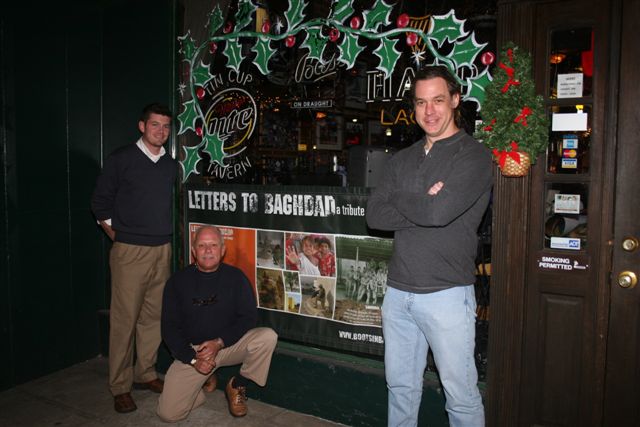
from left to right: me, Greg Garvey (Lest They Be Forgotten), Cliff Knizley (musician and creator, Letters To Baghdad)


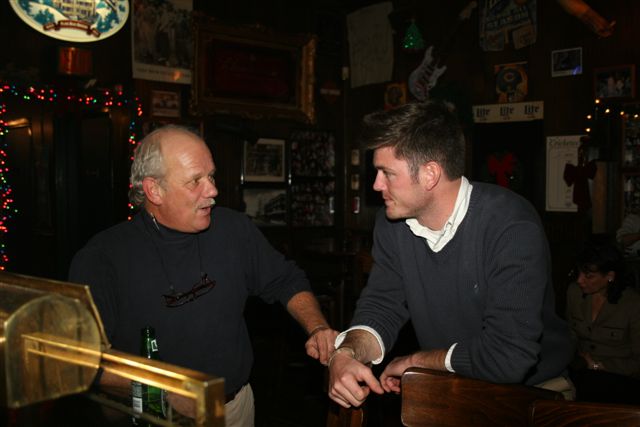
from left to right: Greg Garvey (Lest They Be Forgotten) and Mark Miner (Boots In Baghdad)

LETTERS TO BAGHDAD - A Tribute to Our Troops

The following article can be found at Iraq War News.


Letters to Baghdad: a tribute to our troops

"Mark Miner's words inspired me, that night I wrote 'When I Get Home,' he asked me for the lyrics, and through the power of inspiration we became friends, and this project was born..."-- Cliff Knizley

Inspired by blogger Mark Miner of Boots in Baghdad, musician Cliff Knizley set to work creating a powerful tribute to our Heroes, and turned his talent into a way to support some of the projects that provide assistance to those who give so much to us."Letters to Baghdad: a tribute to our troops" is the result. I first heard of Cliff quite a while ago, when he was still working on the CD. Recently, he sent me a copy to listen to, and asked if I'd be willing to help get the word out.I told him I'd be happy to listen, review, and let people know about the CD, where they could get a copy, and how it's quite a bit more than just a CD.

The line-up of musicians on "Letters to Baghdad" is impressive: Drummer Stan Lynch was an original member of Tom Petty and the Heartbreakers, playing with them for about twenty years. His songwriting / producing efforts include work with Don Henley, The Mavericks, and Tim McGraw, to name a few. Bass player Ronny Cates is a Grammy winner, and a veteran of Petra. Guitarist/engineer Jeff Sims is a well-known veteran of the Gainesville music scene. And then there's singer/songwriter/guitarist Cliff Knizley - when I first checked out his website, I was hooked just listening the musical snippet you find there.

In the emails we've exchanged, Cliff's sincere desire to give something back through his music comes through loud and clear. And in the lyrics of his songs, so does his sincere appreciation for our Heroes.When I first listened to the CD, it was just before Christmas. Sort of unusual cookie-baking musical fare for me, but then again, maybe not so unusual. I found, as I listened, that the CD became intensely personal, right from the very first note. Each tune had some special significance for me - each reminded me of someone I knew. From the beginning, you find out that Cliff Knizley's lyrics are pointed and poignant.

From the start, this CD brought to me images and memories of the heroes I've been privileged to meet through letters, instant messages, pictures, emails, stories, and family members. It became a sort of a musical photo album, conjuring images of the finest among us. The instrumentation isn't artificial or unnecessrily complex - guitars, bass, drums... But it doesn't need to be - it's better than that, and forms a perfect, pure backdrop to the keen-edged lyrics.


Today saw the passing of a legend.
A hero to everyone he knew.
Today saw the passing of a legend.
Never has a soul been so true.

And no he didn't seek fortune and fame.
Few will ever remember his name.
His life wasn't given in vain
Today saw the passing of a friend.

The CD opens with "Passing of a Legend." It's a song that describes a simple hero, and a profound loss. I found myself remembering fallen heroes like PFC Gunnar Becker, Major Steve Reich, and so many others who have paid the ultimate price for all the gifts that freedom gives us. Although each name may not be familiar, each name in the casualty list is a son, a daughter, a spouse, a parent, a friend - a Hero. And each is felt..


Eighty days away from coming home.
After two years of bullets and blazing heat and sandstorms...

When I get home, I'll drop to my knees
and kiss that sacred ground.
When I get home, I'll thank God I'm back in my hometown.
When I get home, I'll still
see the blood and the sweat and the tears
and part of me stays right here.

The second song, "When I Get Home," literally had me trying to keep tears out of the cookie batter. Right away, I was taken back to instant message sessions with my first Soldiers' Angels adoptee - talking about what he was going to do when he left the sights and sounds of duty in Baghdad for the welcome return to his family, talking about what it was like to patrol the city streets. It was about my other adoptees, too - M---, doing convoy security, and who sent me a package, and C---, who voluntarily extended for another year to work with his original unit's replacements, and rejoiced over the historic Red Sox win. This is the song that blogger Mark Miner asked for the lyrics for; those lyrics are found inside the CD jacket. This is my favorite tune on the album, the one that, above all the others, I find playing in my head in idle moments. There's raw emotion in Knizley's voice, with well-woven guitar as a backdrop to deeply moving lyrics.


This is the story of the ones at home.
Who keep the faith and hold it strong.
This is the story of the ones at home.
Who keep the fire burning on.

"The Ones at Home" reminds you that the war isn't just over there - it's here at home, too, in the hearts and the minds and the fears of family and friends waiting and worrying. A wife trying to manage a household without her husband, a father clinging to the last moment with his daughter before she leaves to serve her country. For me, this was about the spouses I've met, the parents who have grieved over a loss, the Soldiers' Angels and others who work tirelessly to support our troops. It's was about the fact that they are all a part of this war.


Lie in waiting, senses are sharp and keen.
Anticipating something you've never seen.
Your heart is pounding and sweat beads up on your face.
For all you know, about to leave this human race.

Moment to moment, day to day,
The Great Unknown is just a step away.

This one is about what civvies like me can't possibly really understand - being there. Again, I was reminded of letters from the Sandbox - words that told of what it was like to be thousands of miles from home in a warzone. It's another one of my favorites. Once again, profoundly moving lyrics ride a wave of pure sound - Cliff's acoustic guitar.

I found that though I played the CD with posting about it in mind, I was quickly lost in the songs - in the stories, in the emotions, and the music. It quickly became less about the post, and more about tones and words and feelings - and about the Heroes that formed the inspiration for it all. Every time I listen to it - and I've listened alot, I find something new to like - some piece of the lyrics that sticks with me.

You can purchase the CD's at Cliff's website - cliffknizley.com. Click to enter the site, and then click the "Boots in Baghdad" icon to sample music, read the lyrics, or purchase the CD. You can also click "albums" to view his other CD's.

Proceeds will be used to benefit some great charities - like Homes for Our Troops, the Freedom Alliance, and Lest They Be Forgotten, and you'll be getting top-notch music, too.

And Cliff has a special offer for Soldiers' Angels members - great for purchasing copies to send to your adoptees - email me for the details.

This is Mark Miner, Gregg Garvey (Lest They Be Forgotten) and Cliff at a recent release party
posted by Pam @ 10:39 AM Comments (2) | Trackback (1)

Wednesday, December 28, 2005

LETTERS TO BAGHDAD - Available for Purchase

To purchase Letters To Baghdad - A Tribute To Our Troops, go to www.CliffKnizley.com. Click to enter the site and you will see a New Release icon in the lower left corner. Click it. BUY IT. Get GREAT music and support a GREAT cause.

Tuesday, December 20, 2005

LETTERS TO BAGHDAD - A Tribute to Our Troops

As I mentioned several weeks ago... Cliff Knizley, a great musician out of Gainesville, FL, has created an incredible album called Letters To Baghdad - A Tribute To Our Troops.

The CD will be available for online purchase very soon at CliffKnizley.com. I will be a the CD release party Wednesday December 21 in Ocala, FL at the Tin Cup Tavern. If you live in Ocala be sure to listen to Cliff and I on 97.3 The Sky with Chip Morris and Mr. PC Wednesday afternoon.

Proceeds from this album will be donated to various soldier charities to include Lest They Be Forgotten, Homes For Our Troops and Freedom Alliance. So, not only do you get some beautiful music, you get to help some soldiers!

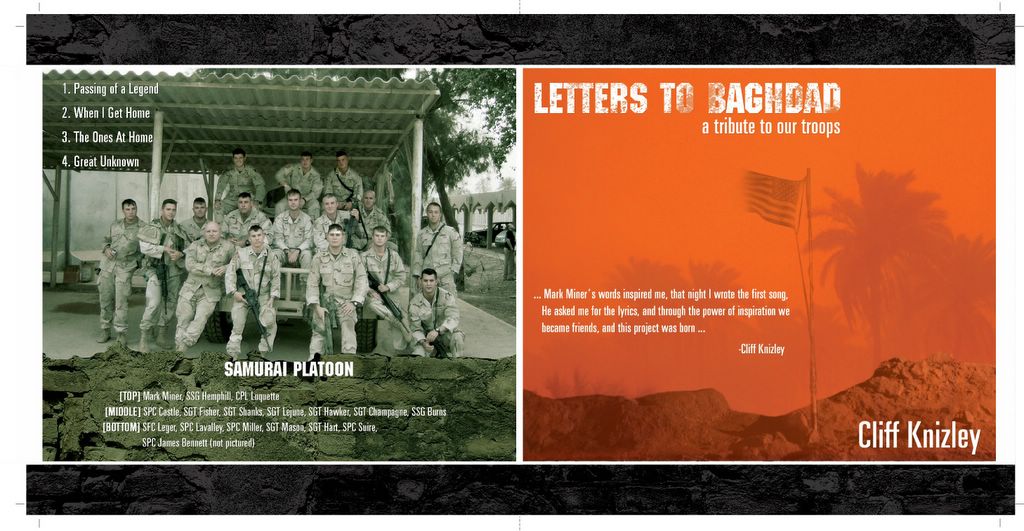
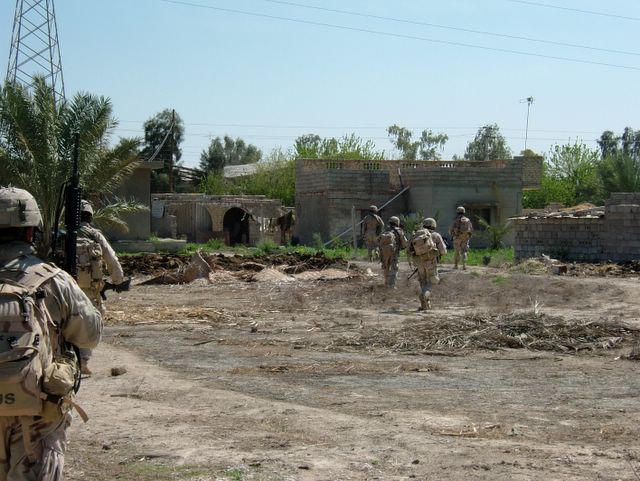
Below is some of the album's art which consists of pictures from Boots In Baghdad. As soon as the CD is available online I will put the link up. There is NO EXCUSE not to buy this folks.


LETTERS TO BAGHDAD - A TRIBUTE TO OUR TROOPS


LETTERS TO BAGHDAD - A TRIBUTE TO OUR TROOPS


LETTERS TO BAGHDAD - A TRIBUTE TO OUR TROOPS

Thursday, December 15, 2005

The Purple Revolution

Very soon, Iraq's mosques will call upon believers to wake up and pray, shortly thereafter, a Greek ghost named DEMOCRACY will call upon all Iraqis, believers and non-believers, Muslims and Christians, Kurds and Arabs, Sunnis and Shi'a, Turkomen and Yezedis, everyone over the age of 18 to go and vote for the first full-term democratic government in the history of this ancient land.

-Vahal Abdulrahman of The Iraqi Vote

"This day is revenge for Saddam"

Iraqis Rewarded for Patience at the Polls
MY Way News
By SAMEER N. YACOUB

BAGHDAD, Iraq (AP) - Trodding along streets emptied of traffic, Iraqis swarmed to polling stations Thursday, lined up patiently to be searched, pored over long paper ballots with dozens and dozens of candidate lists and then cast their votes for a permanent legislature.

Men emerged from one polling site in the capital's Sadr City neighborhood jubilantly waving hands with fingers stained with indelible purple ink to prevent multiple voting.

Policemen guarding a station in another part of Baghdad fired their guns in the air to mark the scheduled end of voting, but authorities then ordered that balloting be extended an hour because of heavy turnout across the country.

Some people walked through the streets wrapped in Iraq's flag.

In the northern city of Mosul, the streets were like a giant playground. Thousands of children took advantage of a countrywide ban on nonmilitary traffic to turn major roads into soccer fields. Families strolled through residential neighborhoods after voting.

Turnout out was even heavy in Sunni Arab areas, which mostly boycotted last January's election of an interim parliament. The mood there was often defiant, with voters from that formerly powerful minority critical of the Shiite Muslim-dominated interim government.

Omar Badry, a 28-year-old supermarket owner, said that government was "imposed by the Americans and not chosen by the people."

He said he voted for the Iraqi Accordance Front of Adnan al-Dulaimi because its leaders "always spoke out against the military operations in Sunni areas and even in Shiite ones."

Tareq Moustafa Abdullah, a 70-year-old Sunni who is a retired government employee, said he regretted not voting in January "because we ended up with people who do not know God as a result."

Ballots ran short in Fallujah, a predominantly Sunni stronghold overrun by U.S. troops a year ago. Mayor Dhari Youssef al-Arsan said 11 of the city's 35 polling stations did not get ballot boxes at all and some sites ran out of ballots in the first hours of voting.

"Participation from the people was very good and unexpected. The biggest indication is that polling sites were running out of ballots because they were not expecting so many people," al-Arsan said, estimating nearly half of eligible voters cast ballots.

Violence appeared to be light. Despite promises from major insurgent groups not to attack polling stations, a mortar shell killed one civilian near a voting site in the northern city of Tal Afar and a grenade killed a school guard near a polling place in Mosul.

Several bombs were found along major roads leading to polling stations in predominantly Sunni Arab neighborhoods and destroyed, the U.S. military reported.

After checking security at polling stations, American troops moved out of the areas and left security to Iraqi police and soldiers. In the insurgent hotbed of Ramadi, masked gunmen were seen guarding some voting sites.

Security officers searched people entering polling stations to guard against attacks. At some sites, men and women lined up at separate entrances. At others, they stood together, waiting their turn to be handed lengthy ballots.

The mood was upbeat among the country's Shiite Muslim majority and in Kurdish areas, where people expressed hope that the new government will make strides against the insurgency.

"We hope that they will bring us security and safety," 80-year-old Abbasiya Ahmad said after voting for the governing Shiite United Iraqi Alliance at Baghdad city hall.

Many Iraqis celebrated the election as another step away from the brutal reign of Saddam Hussein.

"This is day is revenge for Saddam. This is one of the times that Iraqis are free to choose their candidates," said Chiman Saleh, 39, a Kurdish housewife in the northern city of Kirkuk who had two brothers killed by Saddam's security forces in the 1980s.

Interesting Iraq Election Facts

Fast Facts: Iraq Elections

Thursday, December 15, 2005
Assiciated Press

— The Polls: More than 15 million people are eligible to vote in one of more than 33,000 polling stations in Iraq's 18 provinces. There is also voting in 15 countries for eligible Iraqis.

How Many Are Running: There are 7,655 candidates running on 996 tickets. They belong to 307 political groups -- either in the form of single candidates or parties -- and 19 coalitions.

Biggest District: Baghdad is Iraq's biggest electoral district with 2,161 candidates running for 59 of the 275 seats in Iraq's parliament.

Polling Times: Polls opened at 7 a.m. Thursday (11 p.m. EST Wednesday) and close at 5 p.m. (9 a.m. EST Thursday).

Exit Polls: No exit polls or projections are expected.

Results: There may be some scattered and incomplete results Thursday night, although after the Jan. 30 elections it took two weeks to announce final results.

How Candidates Are Elected: Iraqis do not vote for individual candidates, but instead for lists -- or tickets -- that compete for the seats in each of the provinces. Each list corresponds to the seats represented in parliament for each province. This province-by-province voting will determine 230 of the 275 seats.

The remaining 45 will be decided nationwide. All votes cast will be added up and divided by 275 to provide a national threshold number. Any tickets that receive more votes than that threshold gets elected. This provision is designed to help small and medium-sized tickets win representation.

Government: The target is to have the count finished and a government in place by year's end. In the last elections, which did not see much Sunni Arab participation, it took until April 28 to form a government.

Election Day In Iraq

Voting Extended in Historic Iraq Elections

Thursday, December 15, 2005
FOX NEWS

FOX News' Dana Lewis and Liza Porteus and The Associated Press contributed to this report.

BAGHDAD, Iraq — The Iraqi election commission extended voting by one more hour because of high turnout in the country's historic parliamentary elections Thursday.

And to the surprise of coalition forces, violence in Iraq was much lighter than expected and the smattering of attacks didn't appear to discourage Iraqis, some of whom turned out wrapped in their country's flag on a bright, sunny day and afterward displayed a purple ink-stained index finger — a mark to guard against multiple voting.

If all goes well, U.S. officials hope the vote will set the stage for a troop reduction in that country.

"We see a set of circumstances with the elections that we can begin to downsize forces and reduce, significantly, the size of our forces in the aftermath of the election," U.S. Ambassador Zalmay Khalilzad told FOX News. "It can be seen as a calendar of events leading to … U.S. withdrawl."

The high voter turnout was due, in part, to large numbers of Sunni Arabs showing up at some of the country's 33,000 polling stations; many Sunnis boycotted elections earlier this year. Many Iraqis had waited until the last minute to vote, to make sure the security situation was under control before they left their homes for the polls.

An imam in Ramadi was heard over a mosque loudspeaker saying: "God will bless you with a great life if you go out and vote. This is your last chance to vote."

Iraqis were voting to establish a permanent democratic government in Iraq; some preliminary returns were expected late Thursday, but final returns could take days, if not weeks. Vote counting could carry on until the end of December or early January.

Iraqis voted in January to elect the current interim government that drafted the Iraqi constitution, which was approved in October. Strong turnout in Sunni Arab areas this time around bolstered hopes of U.S. and Iraqi officials that more Sunni participation and representation in the government could help quash the insurgency; Sunni Arabs make up the backbone of the insurgency in Iraq.

U.S. officials also say the government need to be able to reconcile Iraq's disparate groups. The Americans also want to avoid protracted negotiations to choose a new prime minister and cabinet — a process that dragged on for three months after the last vote.

"The Iraqi people are showing the world that all people — of all backgrounds — want to be able to choose their own leaders and live in freedom. And we're encouraged by what appears to be a large turnout throughout Iraq," said White House spokesman Scott McClellan.

'Our Revenge on Saddam'

Some Iraqis said Thursday's vote was a symbolic gesture of democracy that had been suppressed for years under the brutal rule of Saddam Hussein.

"This is the day to get our revenge on Saddam," said Kurdish voter Chiman Saleh, a Kirkuk housewife who said two of her brothers were killed by the ousted regime. Voter turnout was brisk in the northern cities of Mosul and Kirkuk, especially in Kurdish districts.

Ethnic tensions in Kirkuk, claimed by Arabs, Kurds and Turkomen, could be seen, however. Norjan Adel, a poll watcher for the Turokman Front, complained of irregularities by the Kurds, including multiple voting.

She prevented a Kurdish policeman from entering the station carrying a flag of the self-ruled Kurdish region, saying: "I only recognize the Iraqi flag, and any other flag is a joke."

More than 1,000 Sunni clerics called on their followers to vote, and insurgent groups, including Al Qaeda in Iraq and the Islamic Army in Iraq, pledged not to attack polling stations.

But several explosions rocked Baghdad as the polls opened, including a large one near the heavily fortified Green Zone that slightly injured two civilians and a U.S. Marine, the U.S. military said.

A civilian was killed when a mortar shell exploded near a polling station in the northern city of Tal Afar, and a bomb killed a hospital guard near a voting site in Mosul.

A bomb also exploded in Ramadi, and the U.S. military said one was defused at a polling station in Fallujah. Some election sites in Ramadi were guarded by masked gunmen.

Maj. Gen Rick Lynch, deputy general for the multi-national forces in Iraq, told FOX News that there were only 14 attacks against polling stations, "which is a direct tribute to the capability of the Iraqi security forces … they wanted to make sure their people could vote for a representative government and they did that today."

"This is an amazing day for the people of Iraq," he added.

"It is a good day so far, good for us, good for Iraq," Khalilzad told The Associated Press. "This is a first step for integrating the Sunni Arabs and bringing them into the political process and integrating them into the government."

Up to 15 million Iraqis were electing 275 members of the first full-term parliament since Saddam's ouster from among 7,655 candidates running on 996 tickets, representing Shiite, Sunni, Kurdish, Turkomen and sectarian interests across a wide political spectrum.

Iraqis do not vote for individual candidates, but instead for lists — or tickets — that compete for the seats in each of the 18 provinces.

An alliance of Shiite religious parties, which dominate the current government, was expected to win the largest number of seats — but not enough to form a new administration without a coalition with rival groups. That could set the stage for lengthy and possibly bitter negotiations to produce a government.

The new parliament will serve a four-year term; an interim parliament was voted in Jan. 30, and the constitution was ratified in October. The new parliament will name a government, including a new prime minister.

With a nationwide vehicle ban in effect, most Iraqis walked to the polls. Streets were generally empty of cars, except for police, ambulances and a few others with special permits.

Tens of thousands of Iraqi soldiers and police guarded polling stations, with U.S. and other coalition forces standing by in case of trouble. U.S. troops and bomb-detecting dogs checked thousands of polling stations before handing over control to Iraqi police.

"Sometimes it feels like we're beating a dead horse, but maybe this here today will be the culmination of it all," said Staff Sgt. Jason Scapanski, 33, of St. Cloud, Minn., assigned to the 101st Airborne in Salahuddin province north of Baghdad.

U.S. and coalition officials who are banking on strong voter turnout to elect a legitimate government in the eyes of the many different Iraqi groups who, despite some of their religious differences, have a common goal: To get a representative government up and running as soon as possible so that U.S. troops can go home.

Sunnis Vote En Masse

In Fallujah, the former Sunni insurgent stronghold overrun by U.S. forces in November 2004, hundreds packed a high school polling station, with many saying they saw the vote as a way to not only get rid of the Americans but to also get rid of the Shiite-dominated government.

"It's an extremist government [and] we would like an end to the occupation," said Ahmed Majid, 31. "Really the only true solution is through politics. But there is the occupation and the only way that will end is with weapons."

Even in insurgent bastions such as Ramadi and Haqlaniyah, Sunnis were turning out in large numbers.

"I came here and voted in order to prove that Sunnis are not a minority in this country," said lawyer Yahya Abdul-Jalil in Ramadi. "We lost a lot during the last elections, but this time we will take our normal and key role in leading this country."

Teacher Khalid Fawaz in Fallujah said he also participated "so that the Sunnis are no longer marginalized."

Sunnis have repeatedly complained of abuse at the hands of Shiite-dominated security forces. U.S. and Iraqi forces have come across several apparent victims of torture around Iraq.

The big turnout in Fallujah also caused problems, with voters, election officials and the mayor complaining of a shortage of ballot boxes and ballots.

Mayor Dhari Youssef al-Arsan, who put turnout at about 45 percent, said 11 out of 35 polling stations did not get ballot boxes and some ran out of ballots in the early hours of voting.

"Three sites stopped because they ran out of ballots," he said. "We had an administrative problem opening polling sites in some of the centers."

He said some of the voters told him that "they thought it was done purposely."

Shiites and Kurds seemed more hopeful that the new government would be more successful than the outgoing one in restoring security and providing basic services. Shiites also appeared confident of retaining their leadership role.

The country's leading Shiite cleric, Grand Ayatollah Ali al-Sistani, told Shiites to support candidates who defend their principles — a veiled warning against turning toward secular political movements.

"They are clerics, and clerics do not steal our money," said Abbasiya Ahmad, 80, as she voted for the Shiite religious bloc, the United Iraqi Alliance, at a Baghdad polling station. "We want people who protect our money."

If all goes well, the United States and other coalition partners would like to begin drawing down their troops next year.

Despite the positive signs in Thursday's elections, some Middle East experts warn that the work is not done when all the votes are counted.

"I do think it's a very significant change, I do think it creates the potential to have a great impact," former Mideast Ambassador Dennis Ross told FOX News, referring to Sunni participation in the elections. "But before we rush to make a decision about how soon change will take place and what it's going to look like," he added, it will take awhile to set up the new government and for Sunnis make revisions to the constitution.

Former Coalition Provisional Authority spokesman Dan Senor told FOX News said he believes the new government may be set up sooner than expected, perhaps within a month after the votes are counted.

"I think the administration here, the U.S. administration, is going to be less reticent about putting pressure on the Iraqis to get a government formed quickly," Senor said.

He also said there may be a problem with the new prime minister having enough power to make decisions, given how the Iraqi constitution decentralizes power in the executive branch, which may lead to gridlock among the Shiites, Sunnis and Kurds on some issues.

"I do think in that regard, decision-making is going to be tough for any prime minister, whoever's elected," he said.

President Jalal Talabani, a Kurd, highlighted a key looming fight — possible amendments to the constitution — as he voted in the northern city of Sulaimaniyah.

"I hope that the Iraqi people will stay united. We hope that the people will vote to keep the constitution that was approved by the Iraqi people," he said.

Tuesday, December 13, 2005

Iraq's Elections

I am going to start posting some good articles and sites that provide solid information on Iraq's elections.

Vahal Abdulrahman, creator of Dear Baghdad, now has another blog dedicated to covering Iraq's elections. Check it out: The Iraqi Vote.

Friday, December 09, 2005

Car Crash

So, it’s about 7:22am and I am driving to work. It is pouring rain. I pull out of a gas station and am heading toward the highway so I can go work in my cubicle so as to pay my bills until I head out for Afghanistan.

I am about a hundred meters behind a Ford Explorer Sport when it spins out of control and flies into oncoming traffic… nailing a PT Cruiser. The sounds of glass and medal shattering, bending and breaking, look like beasts attempting to slaughter each-other. Both vehicles lift off of the ground and spin as they embrace eachother with crushing power.

I immediately grab my cell phone and dial 911. I provide the operator with a quick SIT REP (situation report). I then reach behind me… grab my CLS (combat life saver) bag and run to the scene. A woman and her two daughters lie in the grass on the side of the road. They are okay, just shaken up. Her daughters are around ten and maybe thirteen years old.

Realizing that only one of these three people could have been driving, I ask if anyone is in the other vehicle. I run around to the driver’s side of the other vehicle and find an attractive woman, probably in her late 20’s or early 30’s… pinned in her vehicle.

She has no visible life threatening injuries. She isn’t bleeding. She has full mobility of her upper body. I help her get her seat belt undone. She asks me to open her door. The impact has pushed her into the center of her vehicle. There isn’t going to be anyone opening her door by themselves anytime soon.

As I lean into her passenger door I help her undo her seat belt and look quickly at her legs, wondering if they are just pinned under the dash or shattered by the crushing collision. Then, the Jacksonville Fire/Rescue arrived.

I motion Fire/Rescue toward the woman in the Explorer. If anyone needs immediate attention it’s her. Then I walk to my truck and continue my completely normal and boring day, feeling more alive than I have since I returned home from Baghdad. I can’t wait to get back to the Middle East.

Wednesday, December 07, 2005

HELP the GUARD

My fellow Americans, you have a tremendous opportunity to help the soldiers that make up America's National Guard as well as their families.

Leaders in the United States Congress as well as the Senate are currently considering legislation that would substantially increase health care benifits for soldiers in America's National Guard.

This, in my humble opinion, is long over due.

From patrolling Baghdad to training the Afghan National Army, from guarding airports to rescuing hurricane victims... the National Guard has been there, is there, and always will be there.

We have been serving for over 368 years, America's longest standing military service. Today, more than ever, the National Guard stands tall as one of the strongest defenders of freedom and the American way of life.

I have inserted below some information provided by the National Guard Association of the United States:


The TRICARE amendment will be debated and discussed between the House and Senate conferees within the next few days. Although we will have very strong support from the Senate in those conference negotiations, we still need to urge support from all House and Senate members and especially those from the House Armed Services Committee who are appointed as conferees. There are only a few days left in order to impact this legislation for this year. We need you to act immediately.


PLEASE TAKE THE FOLLOWING ACTION IMMEDIATELY:

Contact your Congressman/Woman and Senators immediately and urge their support for TRICARE. Ask them to contact members of the House Armed Services Committee and Authorization Conferees to urge their support of this critical provision within the Senate version of the defense authorization bill. We need to take care of our Guardsmen and their families and TRICARE for all is something that does just that. We now believe with one heavy closing grassroots effort we can get TRICARE passed this year.

USE "Write to Congress" IT'S SO EASY!

By using our "Write to Congress" feature that can be found on the NGAUS web page www.ngaus.org you can contact your Congressional members directly via e-mail, and send the pre- written message (or edit it as you wish) by entering your zip code in the space provided. Now is the time for Congress to support all National Guard members and their families with a comprehensive health care plan. We urge you, your family and friends to act now!


This is a simple and quick way for you to say thanks to the soldiers serving in America's National Guard. If you have ANY questions please contact me. If you would like, e-mail your zip code to me at bootsinbaghdad@yahoo.com and I will send you your Congressperson and Senator's contact info.

Thank you.

Sunday, December 04, 2005

Afghanistan

I volunteered to go... next month.

Boots In Kabul? We will see.


...MORE TO COME...